





Urine testing is valuable in medical diagnosis, drug screening, and forensic investigations, but sample adulteration can affect the accuracy of results. Therefore, identifying urine adulteration is crucial to ensuring test reliability.
Common Adulteration Methods
Urine adulteration typically involves dilution, chemical addition, or sample substitution. Dilution involves reducing the concentration of the target substance by drinking large amounts of water; chemical adulteration involves adding agents such as bleach, acetic acid, or salt to interfere with the test; and sample substitution may involve the use of animal urine, synthetic urine, or plant extracts.
Identification Methods
1. Physical Examination: Observe the appearance of the urine. Normal urine should be light yellow and transparent. Abnormal color (e.g., too dark or too light), turbidity, or the presence of sediment may indicate adulteration. Unusual odors (e.g., a pungent chemical odor) are also suspicious signs.
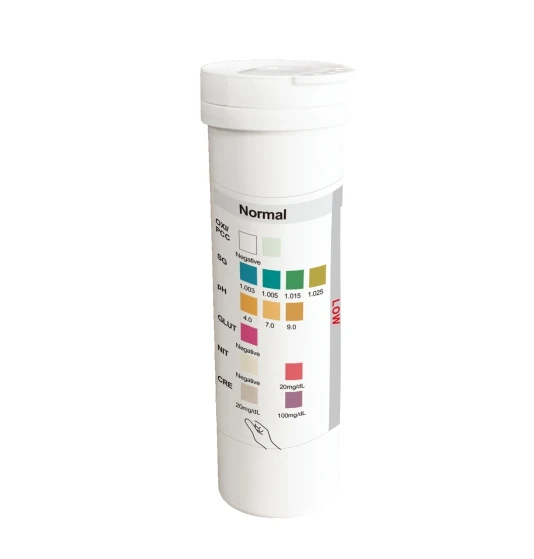
2. Chemical Testing: Test strips are used to measure pH, specific gravity, and specific chemicals. Normal urine pH is typically between 4.5 and 8.0, and specific gravity is between 1.003 and 1.030. Extreme pH values (e.g., too high or too low) or abnormal specific gravity (e.g., due to overdilution) may indicate adulteration. Additionally, testing the urine for preservatives (e.g., formaldehyde, nitrites) or unusual chemical residues (e.g., bleach) can provide further confirmation.
3. Biomarker Analysis: Analyzes natural urine components such as creatinine, urea nitrogen, and electrolytes. A low creatinine level (<20 mg/dL) may indicate overdilution or substitution of urine. An abnormal urea nitrogen to creatinine ratio can also be indicative.
4. Isotope and Spectroscopic Analysis: Advanced techniques such as mass spectrometry or infrared spectroscopy can detect trace adulterants in urine, such as non-human metabolites in synthetic urine.
Urine adulteration testing requires a combination of physical observation, chemical analysis, and biomarker assessment. Laboratories should establish rigorous sample acceptance and testing procedures, incorporating multiple techniques to enhance identification accuracy and ensure the reliability of test results.